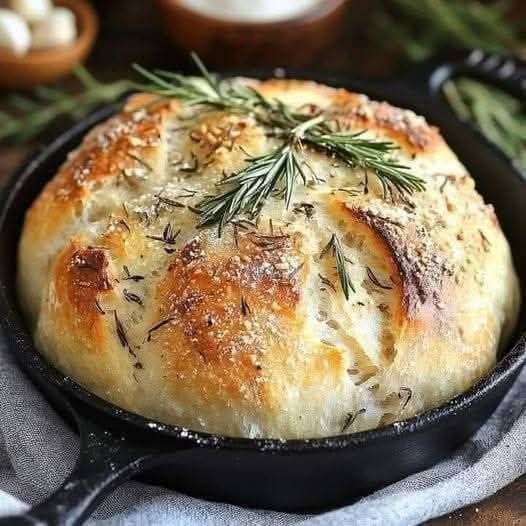
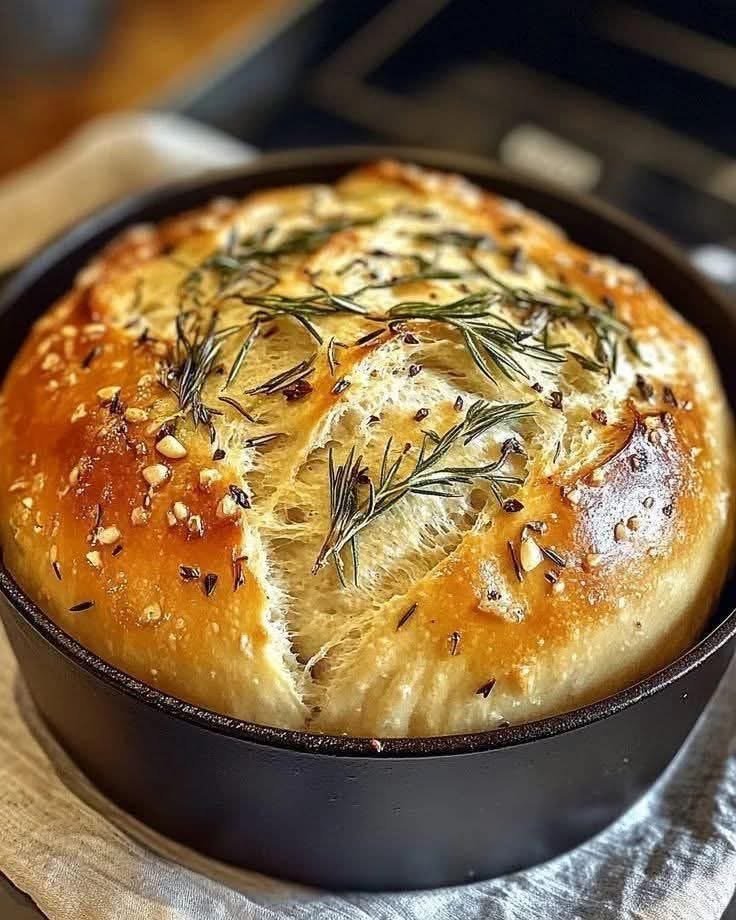
Rustic No-Knead Rosemary Garlic Bread is the kind of bread that fills your home with warmth before it even reaches the table. With a crackling crust, soft airy crumb, and the unmistakable aroma of roasted garlic and fresh rosemary, this bread feels artisanal yet comforting. Best of all, it requires no kneading, no special equipment, and very little hands-on time—making it perfect for both beginners and experienced bakers who want maximum flavor with minimal effort.
This bread pairs beautifully with soups, stews, cheeses, olive oil, or simply a generous swipe of butter.
A Brief History of No-Knead Bread
No-knead bread became widely popular in the early 2000s, though the technique itself is much older. Traditional European bakers relied on long fermentation rather than mechanical kneading to develop gluten. In 2006, food writer Mark Bittman reintroduced the method to modern home cooks, sparking a global revival.
Rustic breads flavored with herbs like rosemary and garlic trace back to Mediterranean regions, especially Italy and southern France, where olive oil, wheat, herbs, and slow fermentation were everyday staples.
Ingredients
Dry Ingredients
3 cups (375 g) all-purpose flour (or bread flour for extra chew)
1½ teaspoons salt
½ teaspoon instant or active dry yeast
Flavor Ingredients
2 tablespoons fresh rosemary, finely chopped
3–4 cloves garlic, minced or lightly crushed
Wet Ingredients
1½ cups warm water (about 100–105°F / 38–40°C)
1 tablespoon olive oil (optional, for richer flavor)
Optional Add-Ins
Coarse sea salt (for topping)
Extra olive oil (for brushing)
Roasted garlic instead of raw garlic (for sweeter flavor)
Equipment Needed
Large mixing bowl
Wooden spoon or spatula
Plastic wrap or kitchen towel
Dutch oven or heavy oven-safe pot with lid
Parchment paper (optional)
Method Overview (No-Knead Technique)
This recipe relies on:
High hydration (wet dough)
Long fermentation
Steam baking in a covered pot
Instead of kneading, time and moisture allow gluten to develop naturally.
Instructions (Step-by-Step)
Step 1: Mix the Dough
In a large bowl:
Combine flour, salt, yeast, rosemary, and garlic.
Add warm water and olive oil.
Stir until a shaggy, sticky dough forms.
Do not knead. The dough should look rough and wet.
Step 2: First Fermentation (Formation/Fermentation)
Cover the bowl with plastic wrap or a towel.
Let rest at room temperature for 12–18 hours.
What happens here: This long fermentation develops flavor, strengthens gluten, and creates air pockets naturally.
Step 3: Shape the Dough
Turn dough onto a floured surface.
Fold it over itself 2–3 times.
Shape gently into a round loaf.
Cover and let rest for 30–60 minutes.
Step 4: Preheat the Oven
Place Dutch oven (with lid) inside the oven.
Preheat to 450°F (230°C) for at least 30 minutes.
This ensures strong oven spring and a crisp crust.
Step 5: Bake
Carefully remove hot Dutch oven.
Place dough inside (on parchment if desired).
Cover with lid and bake for 30 minutes.
Remove lid and bake another 15–20 minutes until deep golden brown.
Step 6: Cool
Transfer bread to a rack.
Cool for at least 30 minutes before slicing.
Cooling finishes the crumb structure.
Fermentation (Formation Explained)
Fermentation is the heart of no-knead bread.
Benefits of Long Fermentation:
Better flavor development
Improved digestibility
Stronger gluten without kneading
Larger, irregular air holes
Natural artisan texture
The yeast slowly consumes sugars, producing carbon dioxide and organic acids that enhance taste and structure.
Health Benefits
Lower effort, less stress baking
Long fermentation may improve mineral absorption
Rosemary supports digestion and has antioxidants
Garlic supports immunity and heart health
Homemade bread avoids preservatives and additives
Serving Suggestions
Dip in olive oil and balsamic vinegar
Serve with soups, stews, or pasta
Use for bruschetta or garlic toast
Pair with cheeses like brie, goat cheese, or aged cheddar
Who Will Love This Bread
This bread is perfect for:
Beginner bakers
Busy home cooks
Artisan bread lovers
Mediterranean food fans
Soup and comfort-food lovers
Anyone who loves homemade aromas filling the kitchen
Common Methods & Variations
Flavor Variations
Add olives or sun-dried tomatoes
Use roasted garlic for milder sweetness
Mix in parmesan or asiago cheese
Flour Variations
Replace ½ cup with whole wheat flour
Use bread flour for extra chew
Cooking Methods
Dutch oven (best crust)
Baking stone with steam tray
Cast iron pot with lid
Conclusion
Rustic No-Knead Rosemary Garlic Bread proves that great bread doesn’t require hard work—just patience and good ingredients. With its crisp crust, fragrant herbs, and soft interior, it delivers bakery-quality results at home. Whether served at a family dinner, shared with friends, or enjoyed quietly with butter, this bread brings comfort, tradition, and flavor together in every bite.